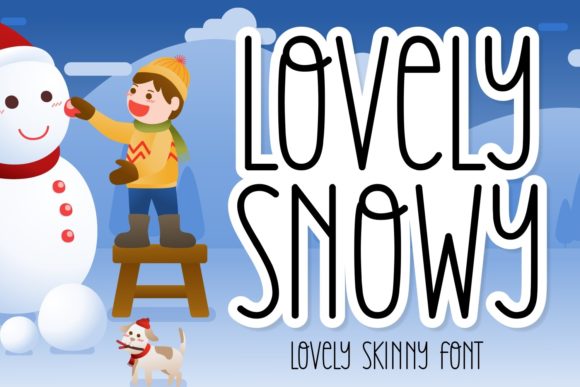
Lovely Snowy: A Cute Handwritten Font for Web Design Projects
As a UI designer working on a new coaching website, I needed a font that felt approachable yet polished. I opened the hero section in Figma and dropped in Lovely Snowy—a thin lettered, cute and natural handwritten font I’d seen recommended for wedding invitations and quote graphics. At first glance, it looked delicate but legible, perfect for a wellness brand that wanted to feel personal without sacrificing professionalism.
Lovely Snowy for Wedding Invitations and Elegant Branding
While Lovely Snowy is often marketed for wedding invitations, its Script Handwritten style works beautifully for any brand that wants to feel human and authentic. I tested it on a hero image with a soft floral background and found that the font’s natural flow and open spacing helped it stand out without competing with the visuals. It’s a Fonts asset that works best in short bursts—like headlines, taglines, or callouts—where charm and clarity are key.
Using Lovely Snowy on Product Landing Pages and Course Sales Pages
For a recent product landing page redesign, I used Lovely Snowy in the main headline and course title. The page was for a digital branding course aimed at creative entrepreneurs, so the font added a touch of warmth to the layout. I paired it with a clean sans serif for body text, which kept the content scannable while letting the headline shine. On desktop, the contrast between the thin strokes and soft curves gave the page a modern editorial feel.
How Lovely Snowy Affects Readability and User Engagement
When working with handwritten fonts, readability is always a concern. Lovely Snowy surprised me with how well it held up on screens. I tested it at different font sizes and found that it remained legible down to 18px on a white background. However, I wouldn’t recommend using it for long paragraphs or small mobile buttons. It’s best reserved for display use—like section headers, logo text, or promotional banners—where it can add personality without hurting usability.
Lovely Snowy in Digital Ads and Social Media Graphics
For a client’s Instagram ad campaign, I used Lovely Snowy over pastel backgrounds and soft textures. The font’s natural rhythm and light strokes made the text feel organic, especially in quote-based ads and testimonials. I exported the graphics as PNGs and found they loaded quickly, which is important for maintaining fast load times in digital ads. The team loved how it helped their brand feel more personable and less corporate.
Pairing Lovely Snowy with Supporting Typography
One of the best ways to use Lovely Snowy is as a display font paired with a more functional typeface. I often pair it with Montserrat or Lato for body copy. This combination keeps the design modern and balanced—especially on landing pages and portfolio websites. The contrast between the Script Handwritten texture and the clean lines of a sans serif helps guide the eye and establish a strong visual hierarchy.
Testing Lovely Snowy for Logo Design and Business Cards
I recently helped a client design a new logo and brand kit. We wanted something that felt warm but professional. Lovely Snowy worked well for the logotype, especially when paired with a minimalist icon and a soft color palette. I exported the logo in SVG and WebP formats and tested it across devices. It scaled beautifully and maintained its charm on both print and digital assets like business cards and email headers.
How to Use Lovely Snowy on Mobile and Responsive Layouts
Mobile readability is a key consideration when using Fonts like Lovely Snowy. I found that on smaller screens, the font’s thin strokes can sometimes blur or become too light. To combat this, I increased the font weight slightly and used a dark background with light text to enhance contrast. For buttons or short phrases, it still works well—but I always test it on actual devices to ensure it’s not compromising legibility.
Checking Webfont Availability and Licensing for Client Projects
Before finalizing any design with Lovely Snowy, I always check the webfont availability and licensing. Most platforms offer the font in WOFF, TTF, and OTF formats, which makes it easy to embed in CSS. I also confirm that the license allows for commercial use, especially when working on client websites, online stores, and branded digital assets. This helps avoid any legal issues later and ensures smooth deployment.